
Freeport Garage Door Guide
When a Spring Goes in Cold Weather in Freeport
Freeport homes built mostly before 1960 run older torsion hardware that a hard freeze can snap fast. Here's what local housing age and cold-band winters mean for your door.
- Licensed & Insured
- Same-Area Service Calls
- Upfront Pricing
The Problem
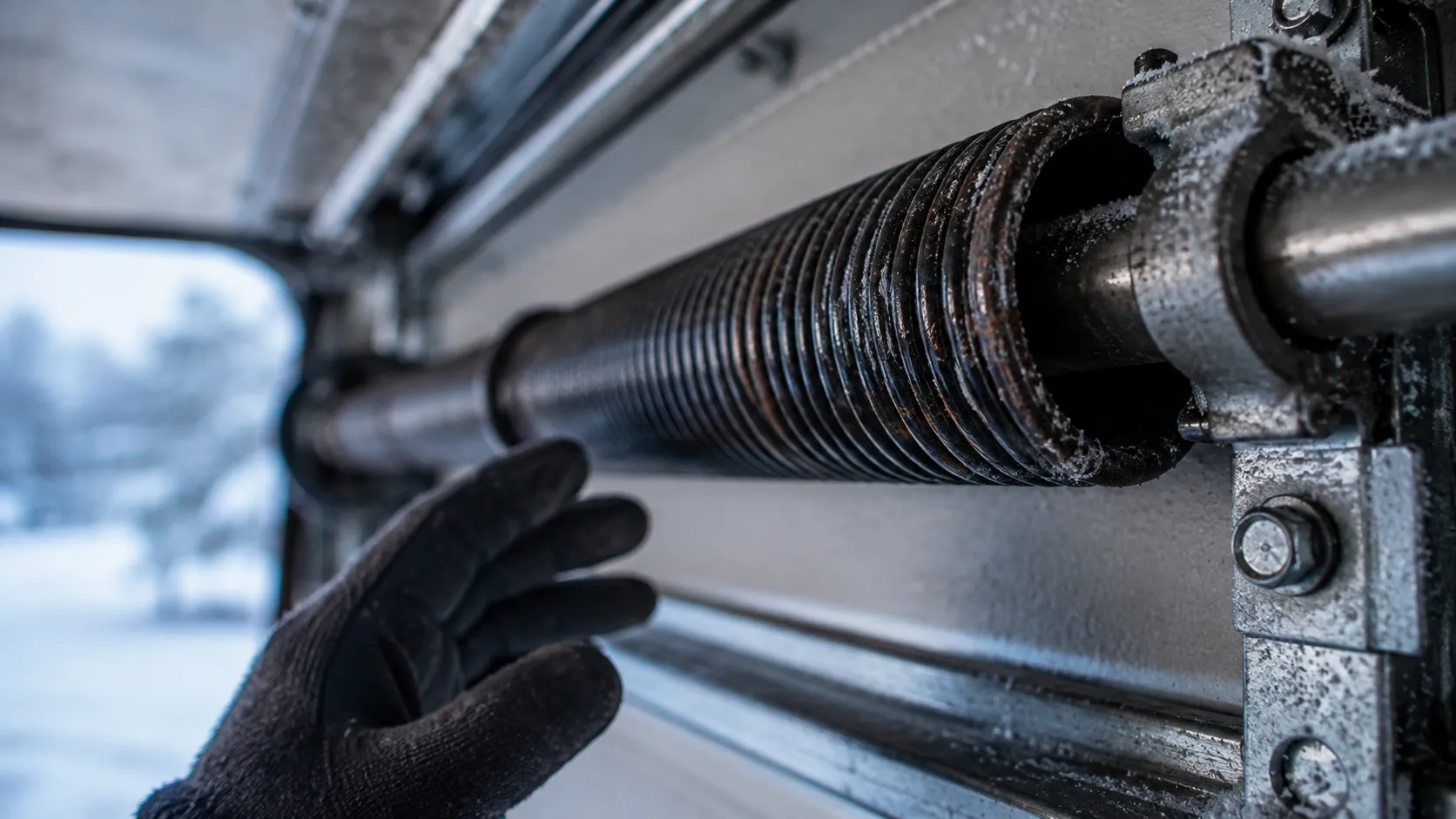
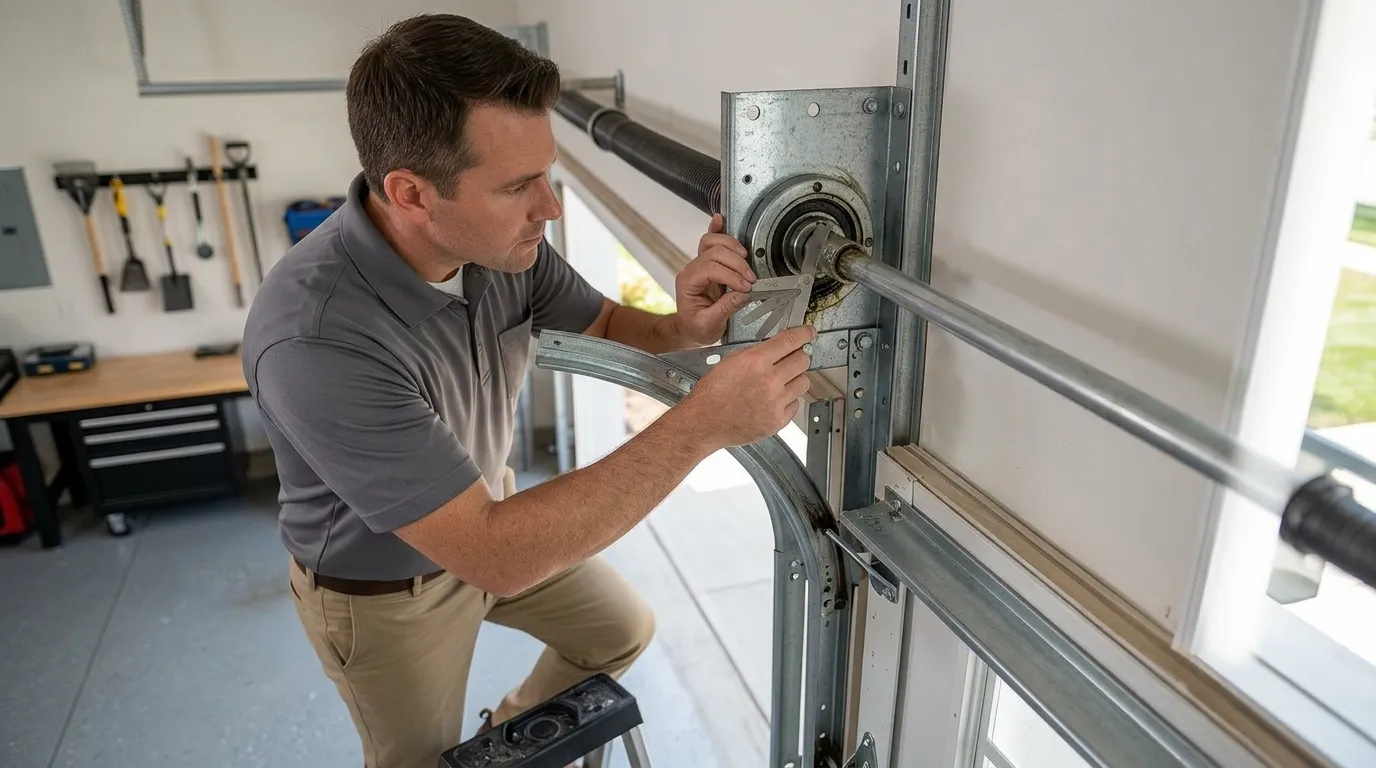
Freeport sits in a severe cold climate band, and most of the houses here were built between 1938 and 1990, with a median build year of 1957. That combination matters more than people think. Steel torsion springs lose flexibility as the temperature drops, and a spring that's been cycling for decades on a house built in the 1950s is already worn thin before the cold ever touches it.
When a hard freeze hits, the metal contracts, the coil tolerances tighten, and a spring that had another season left in warmer weather can snap on the first cold morning open. This isn't a design flaw in your door. It's what happens when older hardware meets a real winter.
Across the 13 named communities in this service area, the pattern repeats: pre-1960 stock, original or long-replaced torsion setups, and a January that doesn't forgive worn steel. If your door has been getting louder or slower to open over the past few months, that's usually the spring telling you it's near the end, not the cold causing a new problem out of nothing.
The Common Mistake
The mistake most owners make is waiting for a full break before calling anyone, because the door still opens. A spring under strain in cold weather doesn't always snap clean - it can flex to one side, catch, or bind halfway. People spray a little lubricant on the track, the door works for a few more days, and they figure the fix held.
It didn't; the spring is still degrading and the opener is now doing more of the lifting than it's built for. On the pre-1960 housing stock common here, this also means opener motors from an earlier retrofit are absorbing that extra strain, which can shorten their life too. The other common mistake is assuming a repair from a warmer month will hold the same way in January.
A spring that's been resized or adjusted in summer can behave differently once the coil temperature drops well below what it was set for. If your door was serviced in fair weather and starts acting up again once it gets cold, that's worth a second look, not a shrug.
Doing Nothing For Now
Ignoring a stiff or slow-closing door through a cold spell is a real option some owners take, and it's not always wrong - a door that's merely sluggish, not broken, can often wait a few weeks without getting worse. I won't tell you every squeak needs an immediate call. But a spring that's already showing a visible gap or has started making a popping sound under load is a different situation.
Leaving that alone through a stretch of severe cold, which is the norm for this area, raises the odds it lets go while the door is up, and a garage door coming down uncontrolled is a real safety issue, not just an inconvenience. With 5,232 owner-occupied houses across the service area, many carrying the same era of original hardware, this isn't a rare edge case - it's a seasonal pattern. If you're not sure which situation you're in, that uncertainty itself is a reason to get it looked at before the next freeze, not after.
What Local Conditions Do
Local conditions here do two things at once: the severe cold band stresses the steel, and the age of the housing stock means a lot of that steel is original or close to it. A door installed when a house was built in the 1950s or 60s wasn't engineered with today's spring cycle ratings, and decades of freeze-thaw cycles compound faster than they would in a milder climate.
That's part of why a repair plan that works fine in a newer subdivision elsewhere doesn't always translate directly to a house on Freeport's older blocks - the hardware underneath is a different generation. One honest limit: if a spring has already failed and the drum or cable shows wear from running unbalanced, a spring swap alone won't fix it - at that point you're looking at replacing more of the assembly, and I'll tell you that up front rather than sell a partial fix.
How We Can Help
Garage Door Repair
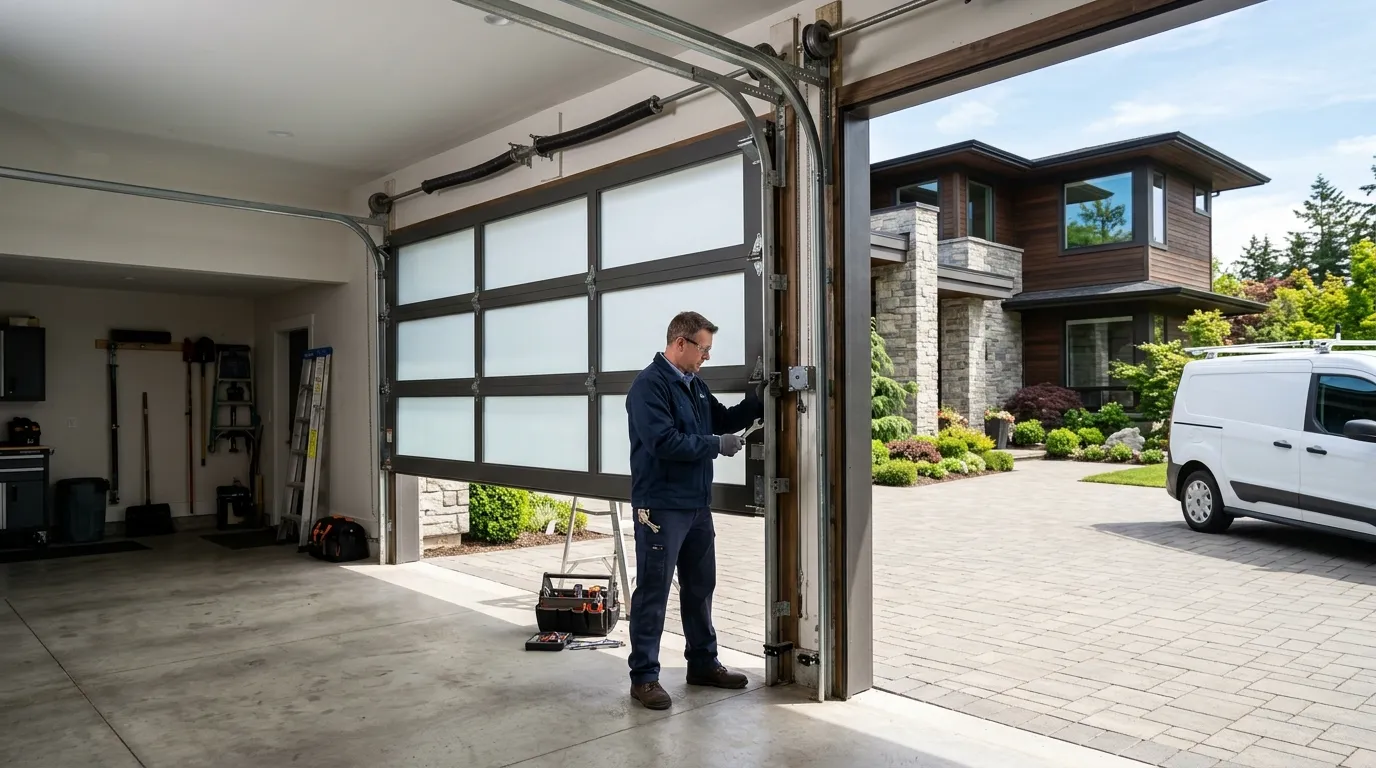
Springs, cables, tracks, rollers, and openers fixed by a tech who explains the problem before touching anything.
Learn more →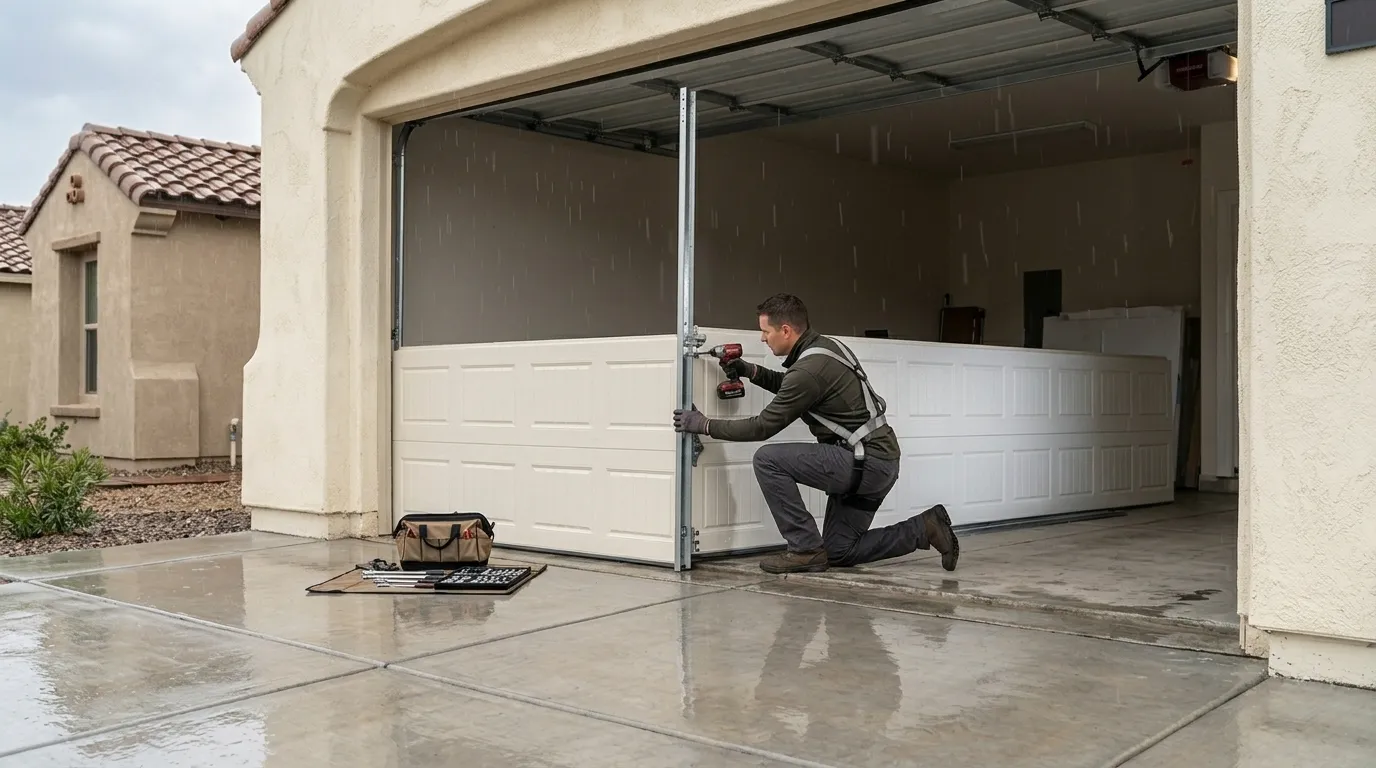
Garage Door Installation
New sectional doors sized and installed for the housing stock actually built in this area.
Learn more →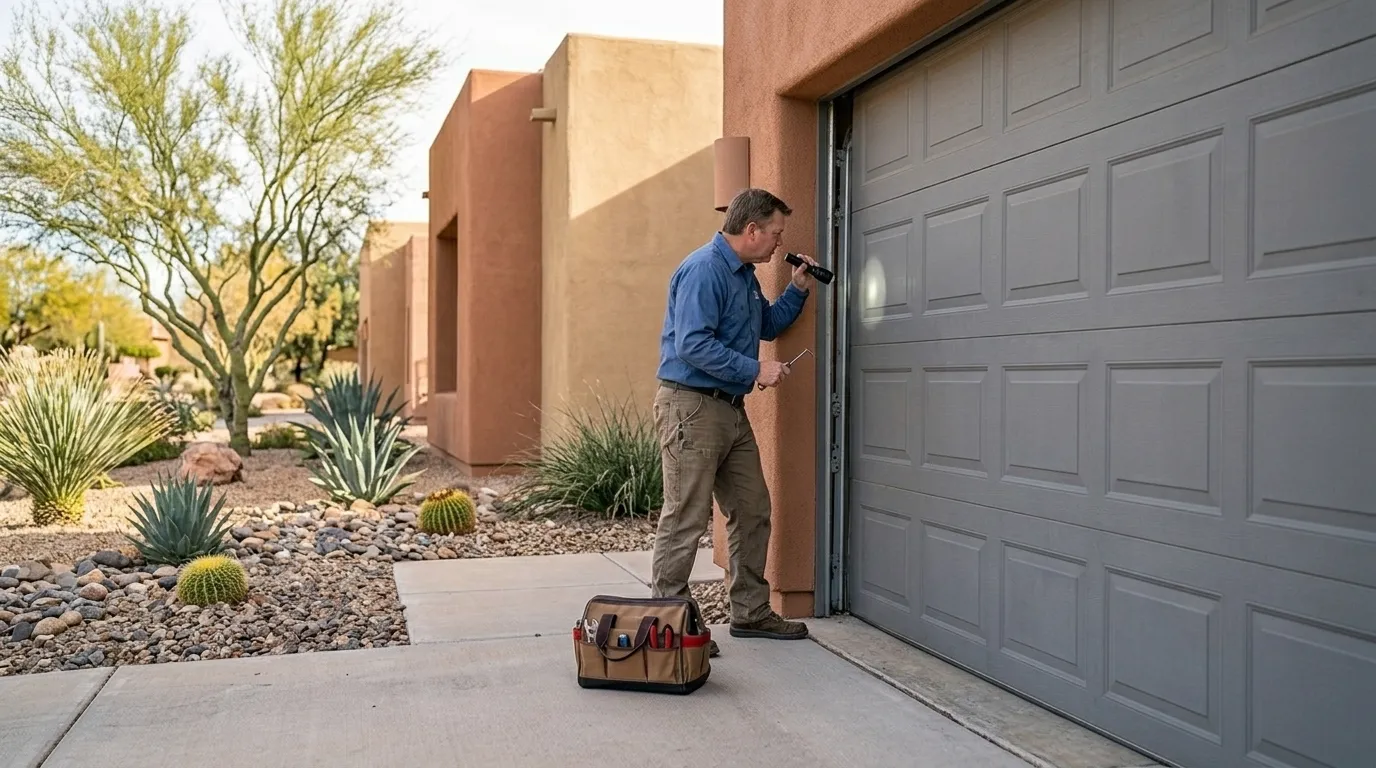
Garage Door Service
Tune-ups, lubrication, and safety checks that catch a small problem before it becomes a service call.
Learn more →Frequently Asked Questions
Why do garage door springs break more in winter here?
Freeport sits in a severe cold climate band, and steel torsion springs stiffen and lose give as temperatures drop. Combined with housing stock that's mostly pre-1960, a lot of the springs still in service are older and closer to the end of their cycle life, so a hard freeze is often the final push on a spring that was already weakening.
Is it safe to keep using a door that's stiff in cold weather?
A door that's just slower or stiffer can often wait. One that's popping, sagging visibly on one side, or straining the opener motor shouldn't. That's usually a spring near failure, and leaving it under load through more cold days raises the chance it breaks while the door is open.
Does the age of my house affect what's wrong with my door?
Yes. Median build year across this area is 1957, and older torsion setups from that era weren't rated the way modern hardware is. A house from the 1950s or 60s is more likely to be running original or long-since-adjusted hardware, which behaves differently under stress than a newer installation.
Have a Door That Needs a Second Opinion?
Call and describe what it is doing - we will tell you what it likely is.