
Freeport Garage Door Guide
What Freeport's 1957-Median Housing Means for Your Garage Door
Freeport homes built between 1938 and 1990 face cold-climate strain on garage door hardware. See what local housing age and winter weather mean for your door.
- Licensed & Insured
- Same-Area Service Calls
- Upfront Pricing
The Problem
Most of the houses in this service area went up between 1938 and 1990, with the median build year sitting at 1957. That's not a small detail.
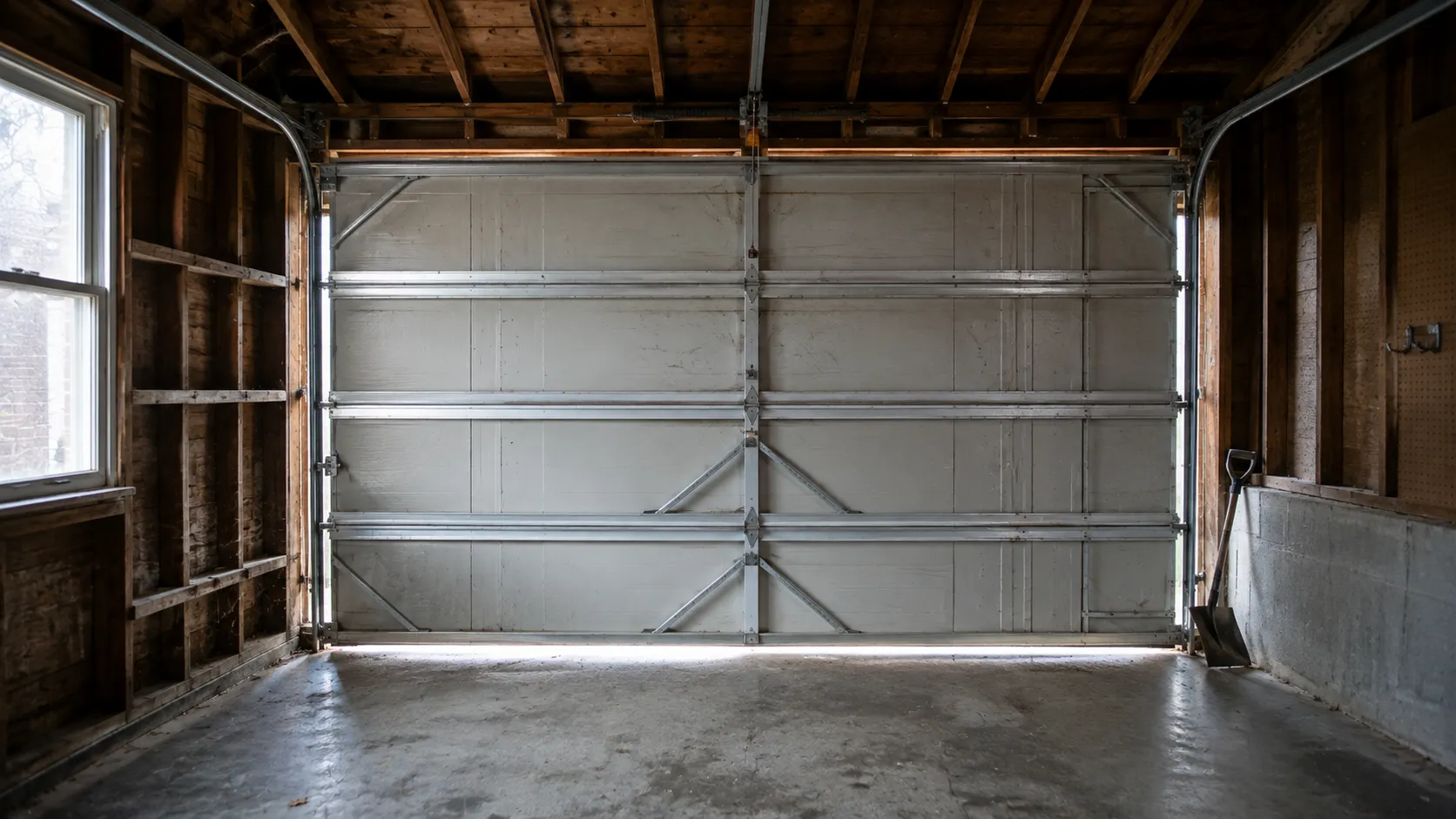
It means the garage door on a typical house here is either original to a mid-century build or a replacement bolted onto framing and track brackets sized for hardware that hasn't been made in decades. Across the 13 named communities we cover, most garages predate 1960, which puts a lot of doors on side-mounted torsion or extension springs that modern parts weren't drawn up to match.
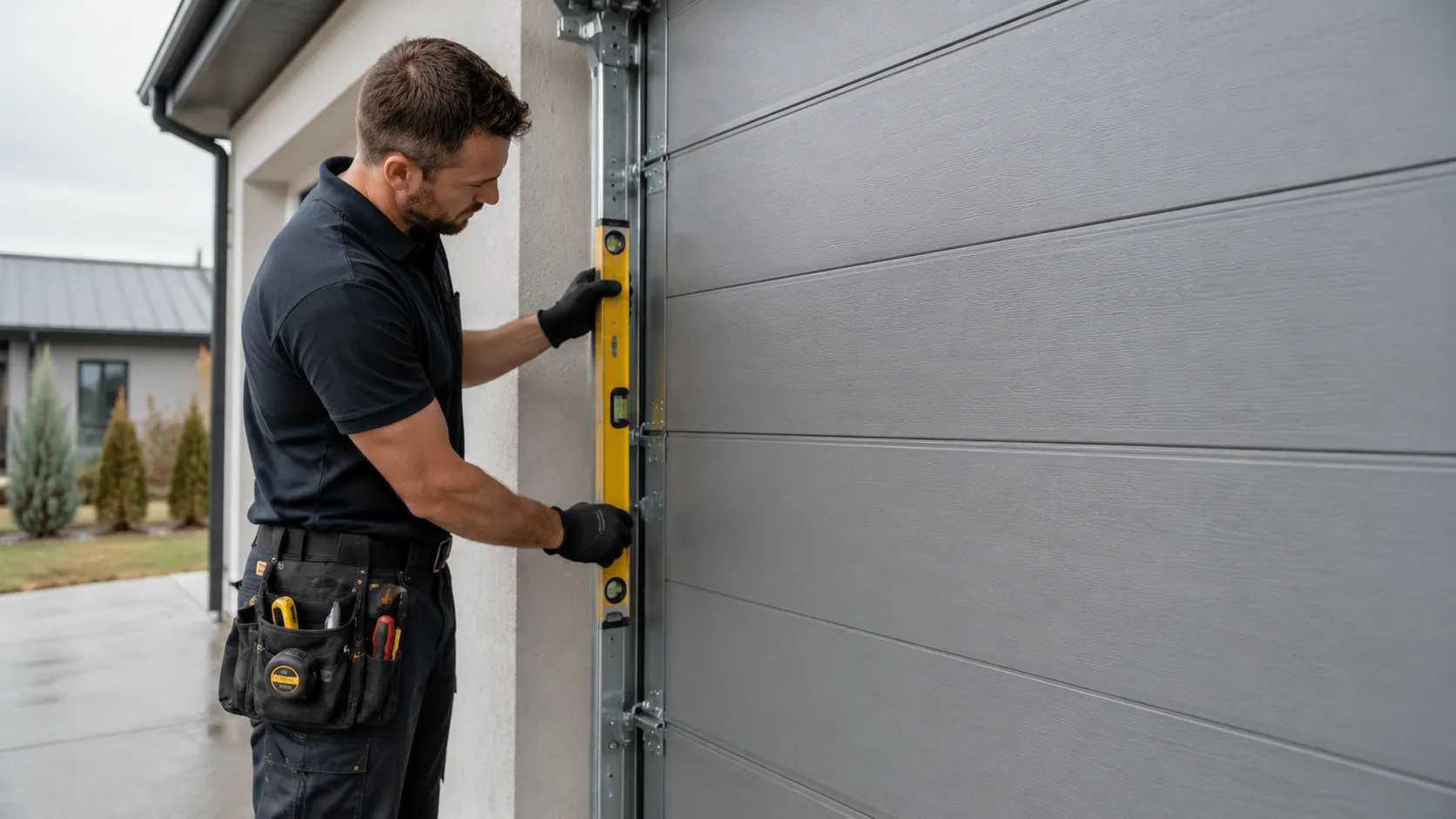
That gap between old framing and new parts is where most of the trouble starts. A track that's slightly out of square because the header has settled over 60-plus years won't take a stock replacement roller kit the way a new-construction opening will. Add a cold-severe climate on top of that, and steel components that were fine in July start binding, popping, or cracking in January.
The problem isn't that these doors are old. It's that the fixes people reach for assume a newer, squarer opening than what's actually behind the drywall.
The Common Mistake
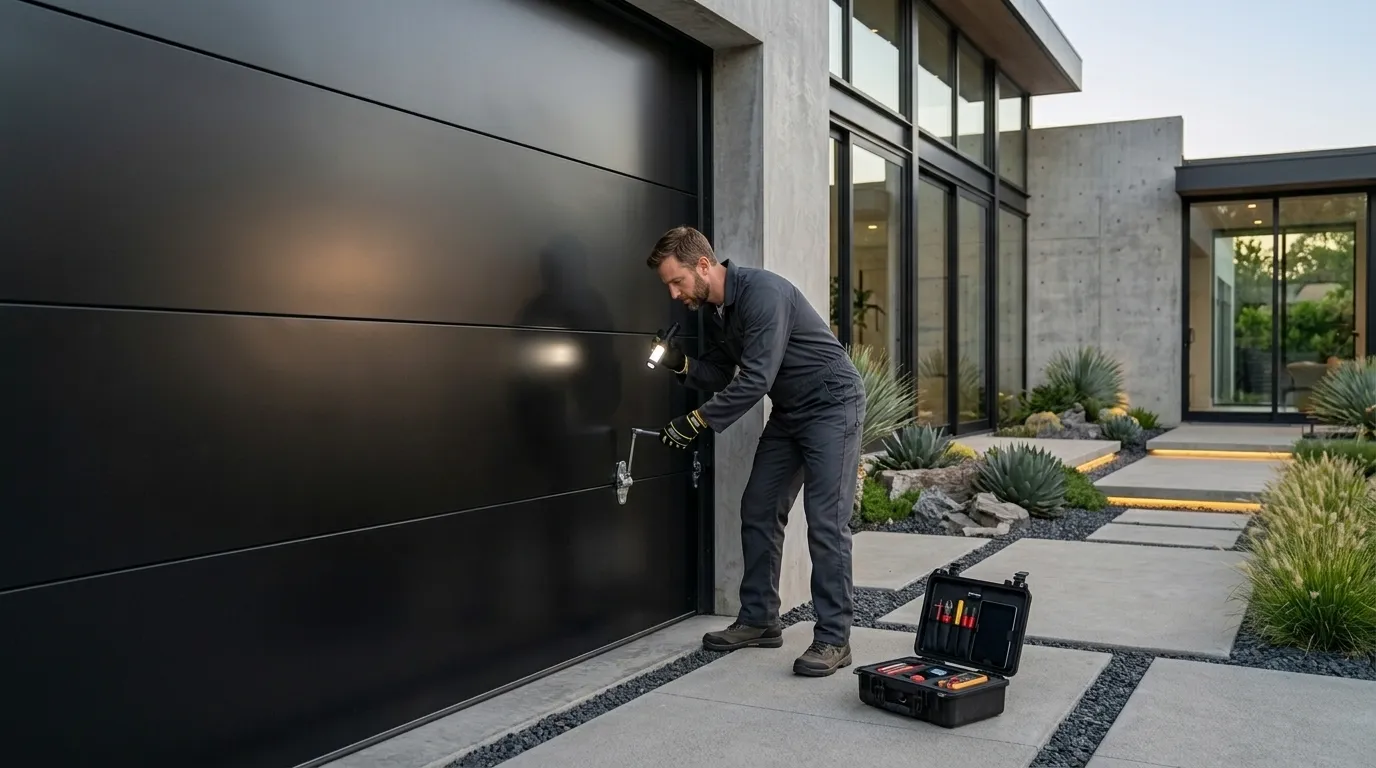
The mistake we see most is treating a 1950s or 1960s door opening like it's the same as a house built last year. Someone orders a big-box torsion spring kit sized for a standard modern door, and it's close enough to work for a few months before it wears the drums unevenly or throws the door out of balance. On a house from this era, the track spacing, the header height, even the way the door is hung can be a half inch or more off from current spec, and that half inch matters once winter cold makes steel contract.
The other version of this mistake is skipping the hardware entirely and only replacing the door skin. A homeowner swaps in a newer insulated panel door but keeps the original rollers, hinges, and springs because they still turn. Those parts have been flexing in a cold-severe climate for 60-plus years already.
Pairing new panels with tired springs just moves the failure point from the door to the opener, which now has to work harder to lift a heavier insulated door on worn-out springs. Match the parts to the era of the opening, not just the parts to each other.
Doing Nothing For Now
Not every issue on an older door needs a same-week call. If the door is cosmetically dented but still opens smooth, tracks true, and the spring holds tension evenly, it's fine to wait, especially if you're not planning to sell soon. With a median household income of $64,107 across the service area, a full replacement is a real budget decision for most households here, not something to rush into over a dent or a squeak.
What's not worth waiting on is a spring that's already showing a gap, or a cable that's frayed. Those don't get better with time, and in a cold-severe climate, a spring under stress is more likely to fail on a cold morning than a mild one. Our honest limit here: we don't recommend patching a door that's structurally tired just to put off the cost.
If the panels are rusted through or the track is bent past straightening, spending money on a repair delays a replacement you'll still need. We'll tell you which side of that line your door is on rather than guess in your favor.
What Local Conditions Do
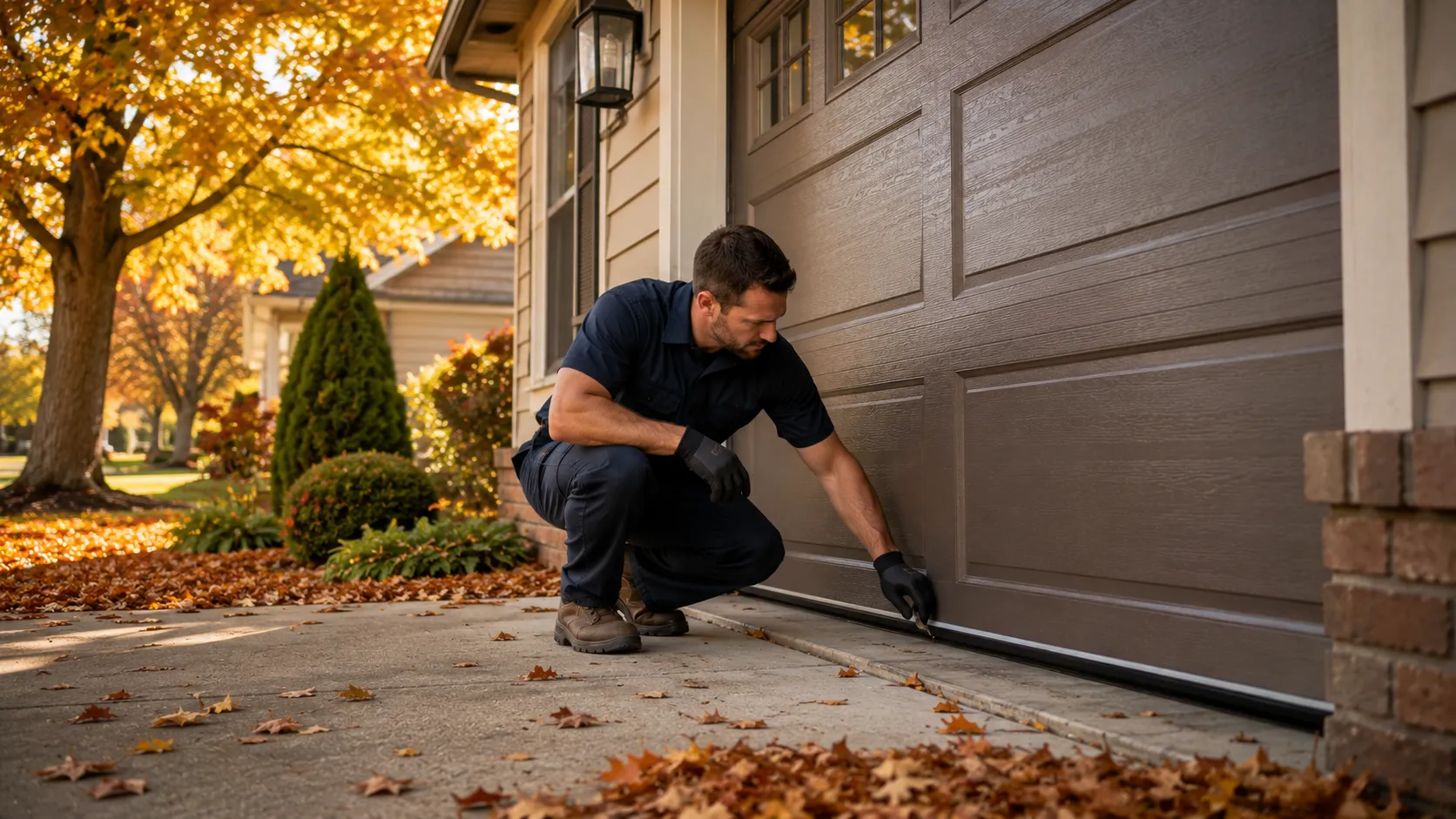
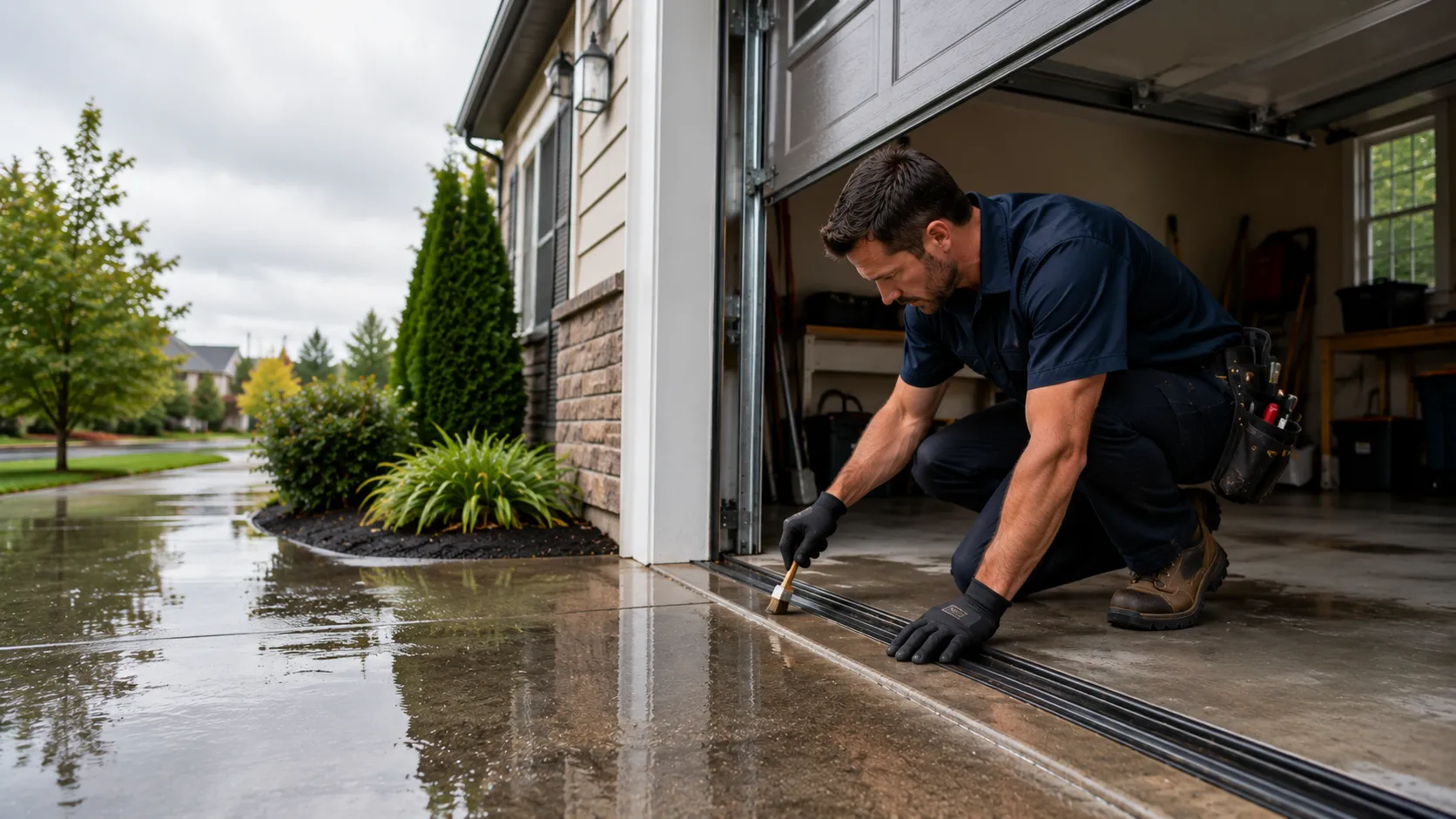
A cold-severe climate band does specific things to a door built the way most of these are. Steel torsion springs lose a little tension as they get cold, so a spring that's borderline in September can be noticeably harder to lift by January. Weatherstripping on doors from the 1950s and 1960s era was never built to the sealing standard used today, so gaps widen as vinyl hardens in low temperatures, letting more cold air into the garage than the door was ever designed to keep out.
Freeze-thaw cycling also moves concrete slabs a little each winter, and on a foundation that's 60 to 80 years old, that movement has already happened many times over. The result is a slab edge that isn't quite level anymore, which throws off how the bottom seal meets the floor.
None of this means the door is failing. It means the door is doing exactly what a door from 1957 does in this climate, and the fixes that work are the ones that account for both the age of the house and the winters it's been sitting through.
How We Can Help
Garage Door Repair
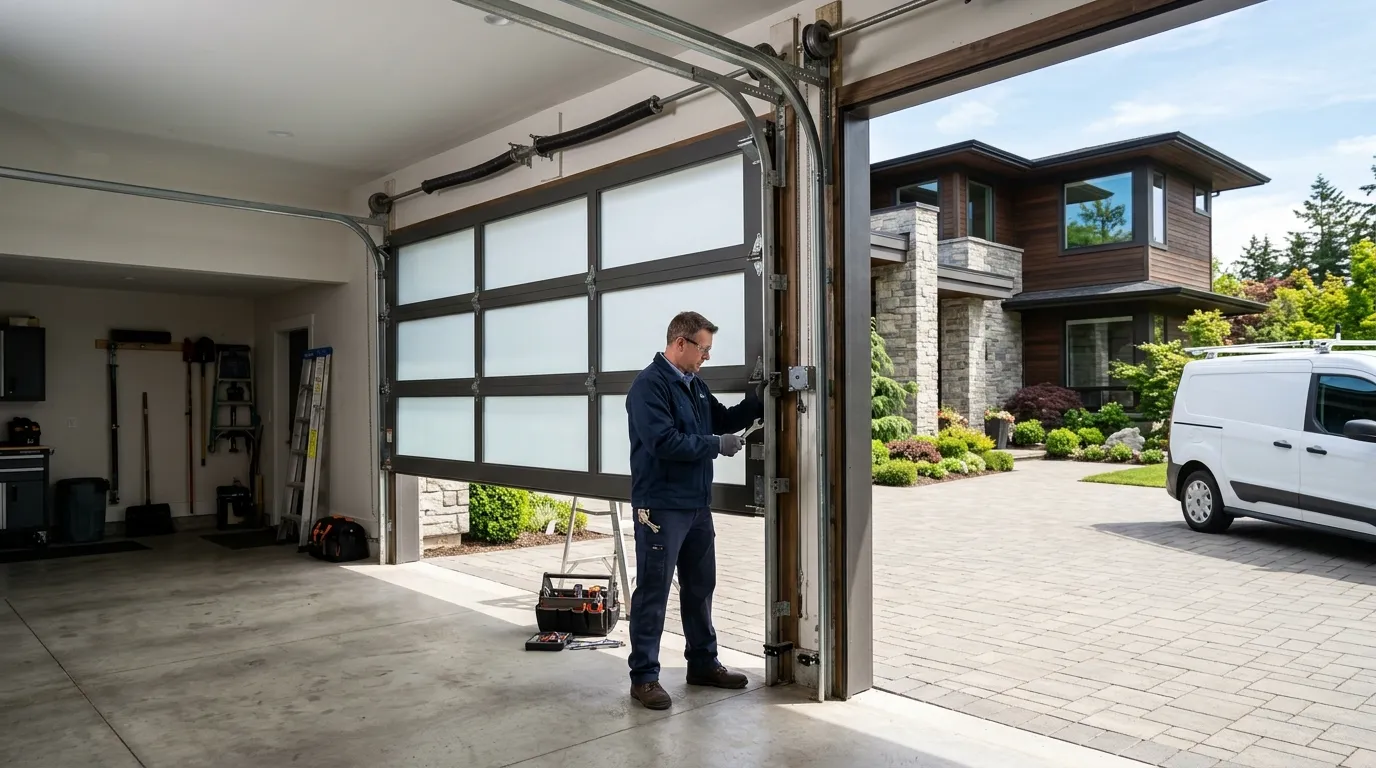
Springs, cables, tracks, rollers, and openers fixed by a tech who explains the problem before touching anything.
Learn more →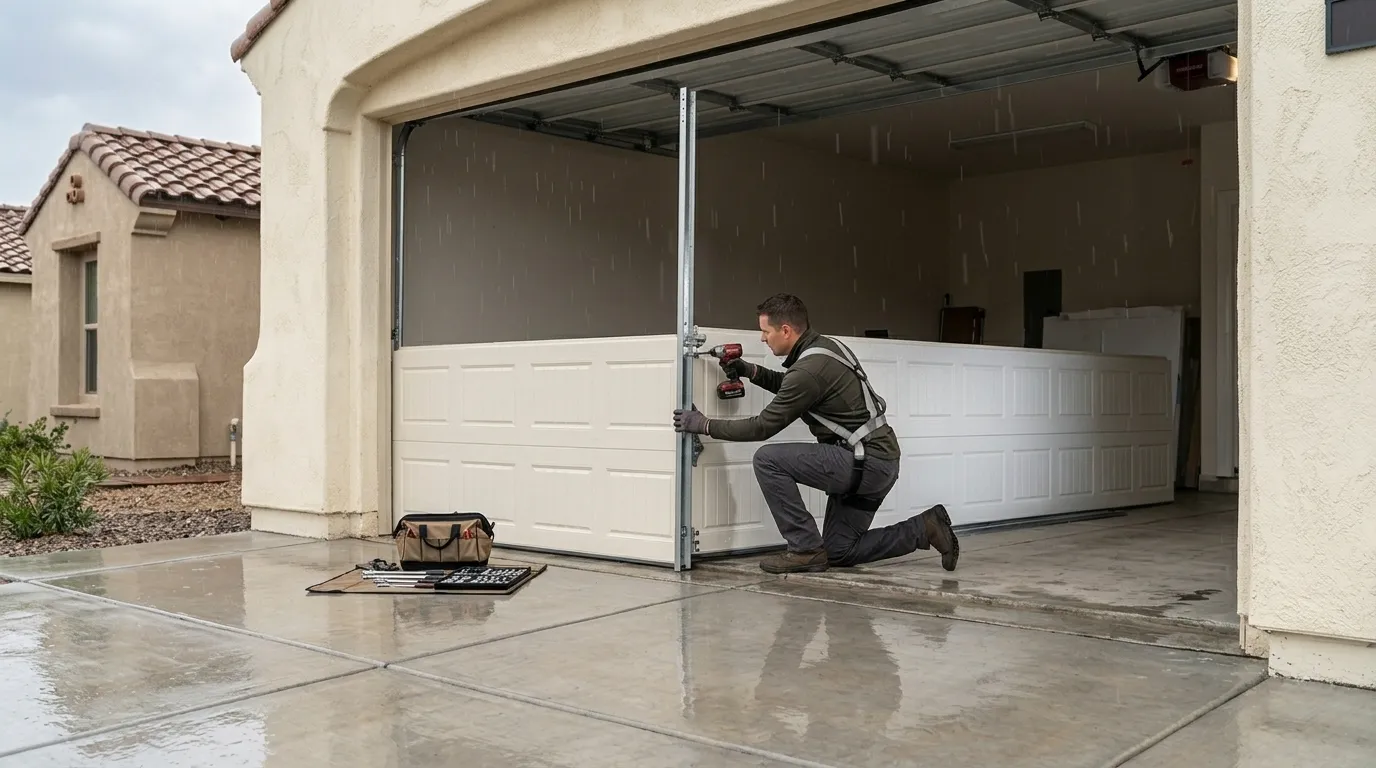
Garage Door Installation
New sectional doors sized and installed for the housing stock actually built in this area.
Learn more →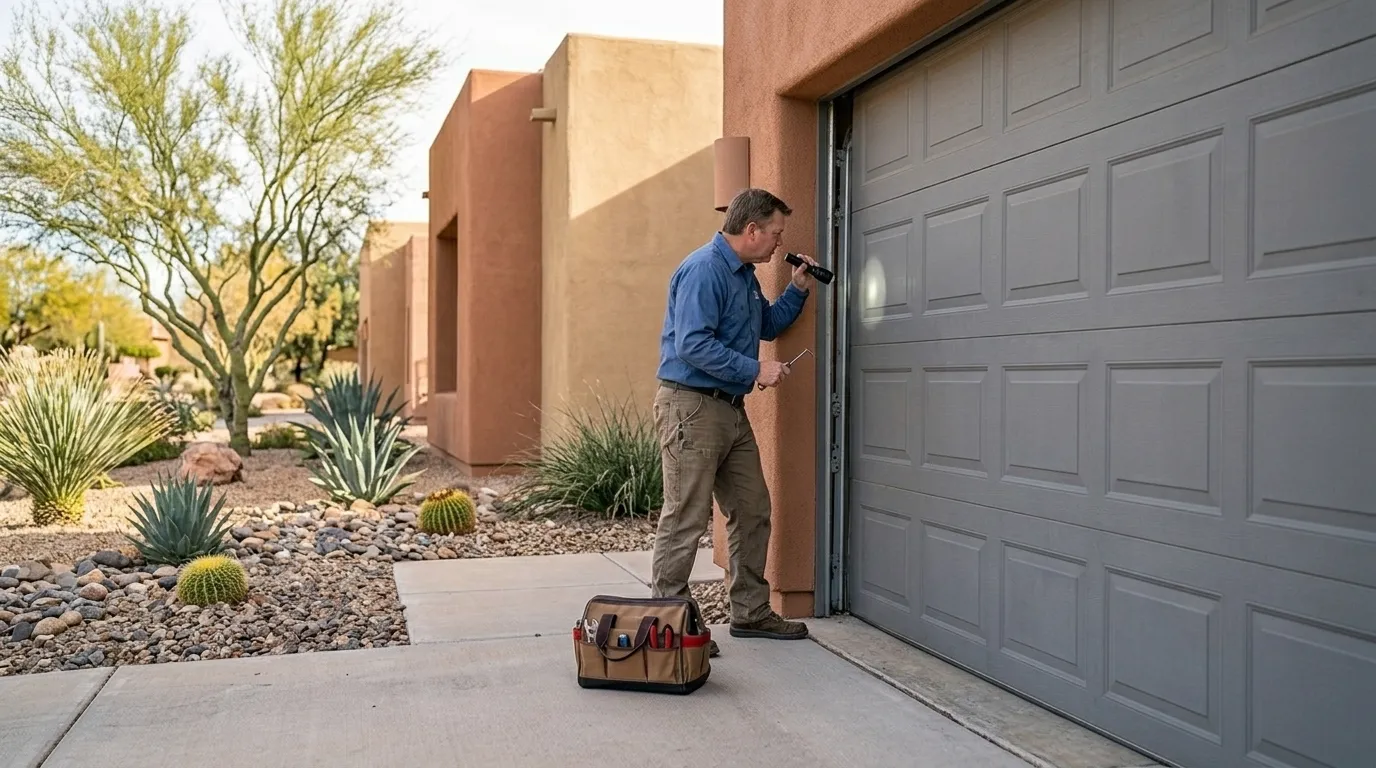
Garage Door Service
Tune-ups, lubrication, and safety checks that catch a small problem before it becomes a service call.
Learn more →Frequently Asked Questions
Why does my garage door get harder to open in the winter?
In a cold-severe climate, torsion springs lose some tension as steel contracts, so the same door that lifted easily in summer feels heavier in January. On older houses in this area, springs are often original or long overdue for replacement, which makes the seasonal difference more noticeable than it would be on newer hardware.
Is it worth replacing an old wood-panel door instead of repairing it?
Depends on condition. If the panels are still square and the springs and track are sound, a repair can carry the door for years. If the wood has swollen, rotted at the bottom, or the frame has warped from decades of freeze-thaw movement, repair costs start adding up fast and replacement is usually the better spend.
Do you work on houses in Baileyville or Pearl City, not just Freeport?
Yes, we cover the wider service area including Baileyville, Pearl City, Dakota, Lena, Forreston, Orangeville, Pecatonica, Davis, Leaf River, Lake Summerset, Durand, Stockton, and Mount Morris. Housing stock across these towns runs the same 1938 to 1990 era as Freeport, so the same hardware issues show up.
My door track looks slightly bent. Is that from age or something I did?
On houses built well before 1960, it's often the opening itself that's slightly out of square from decades of settling, not damage to the track. We check the header and jamb alignment before assuming the track is the problem, since replacing a track on an out-of-square opening just repeats the issue.
Have a Door That Needs a Second Opinion?
Call and describe what it is doing - we will tell you what it likely is.