
Freeport Garage Door Guide
What That Noise Is Actually Telling You
Freeport homes mostly date to 1938-1990, with pre-1960 stock across the area. Here's what specific noises mean on that hardware, and why cold makes them worse.
- Licensed & Insured
- Same-Area Service Calls
- Upfront Pricing
The Problem
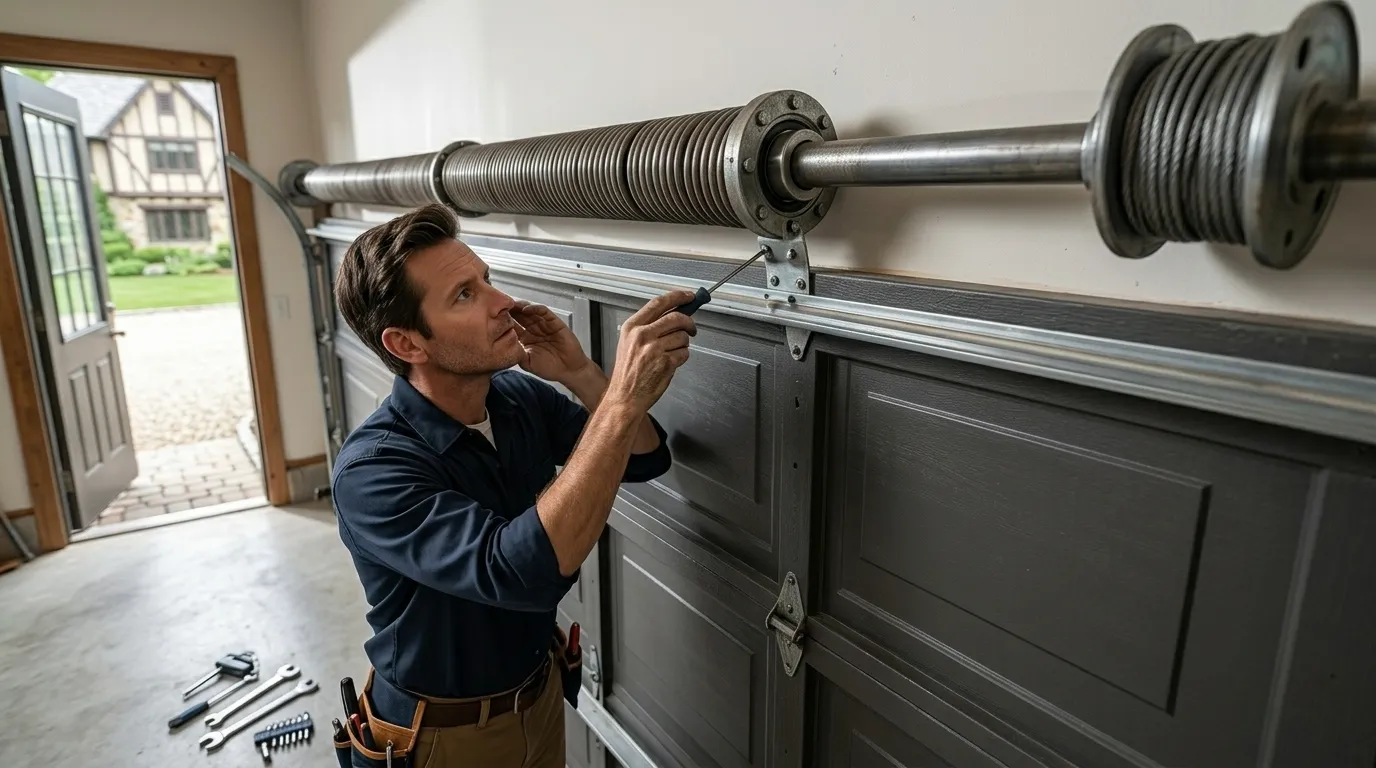
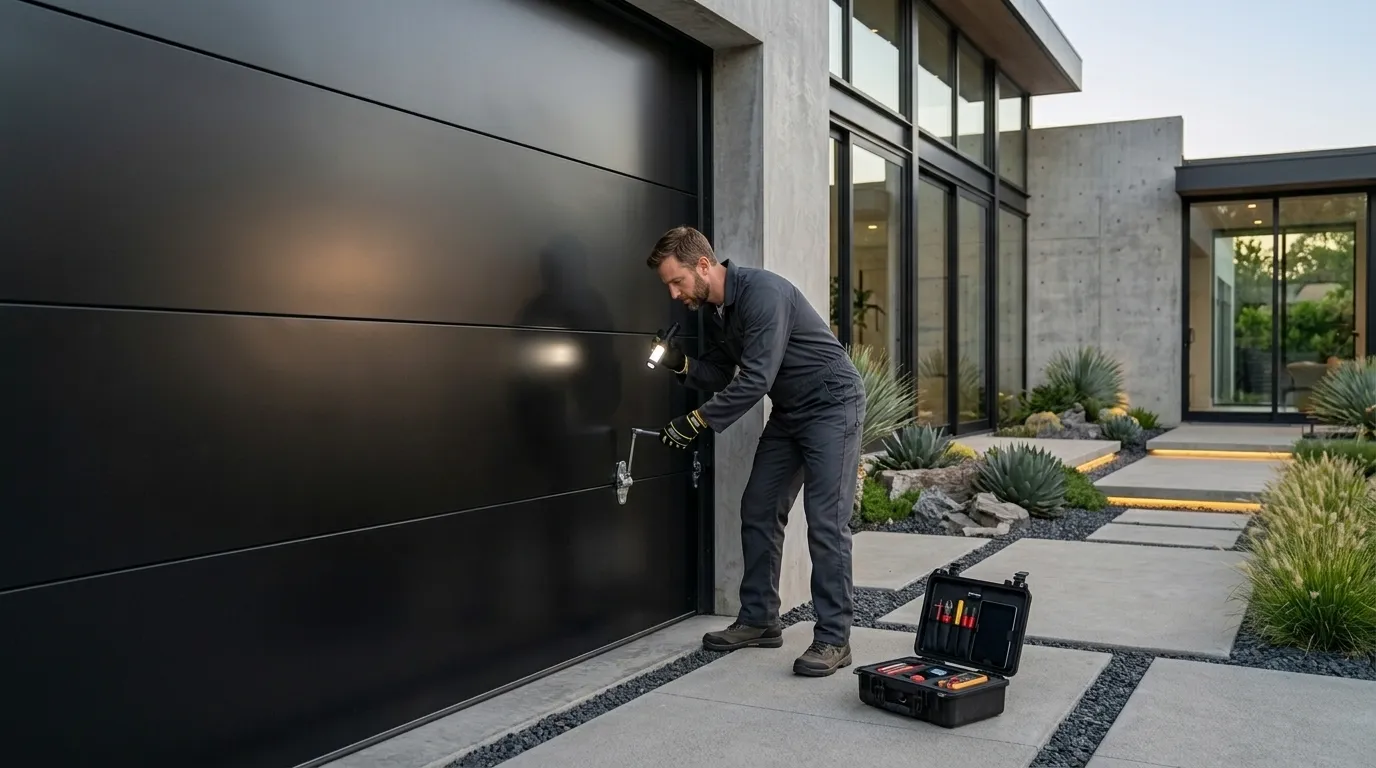
Most houses on this side of Freeport went up between 1938 and 1990, with a median build year of 1957, and thirteen named areas in the service territory are mostly pre-1960 stock. That matters because a door installed or replaced on a house that age is usually running original or first-generation-replacement hardware: steel tracks that have shifted a little with the foundation, rollers that were never upgraded to nylon, and torsion springs sized for a lighter door than whatever got hung on it later. When one of those doors starts making noise, the sound is not random.
A rhythmic thump once per rotation is almost always a flat spot on a roller riding in a track that's been in place since the Eisenhower era. A sharp bang on the way down is a broken or slipping cable, and on this vintage of hardware the cable drums are often the kind that don't take kindly to being re-torqued in the field. A grinding hum from the opener head usually means a gear set that outlived the motor it came with.
None of these are cosmetic. They are the hardware telling you where the load is going wrong.
The Common Mistake
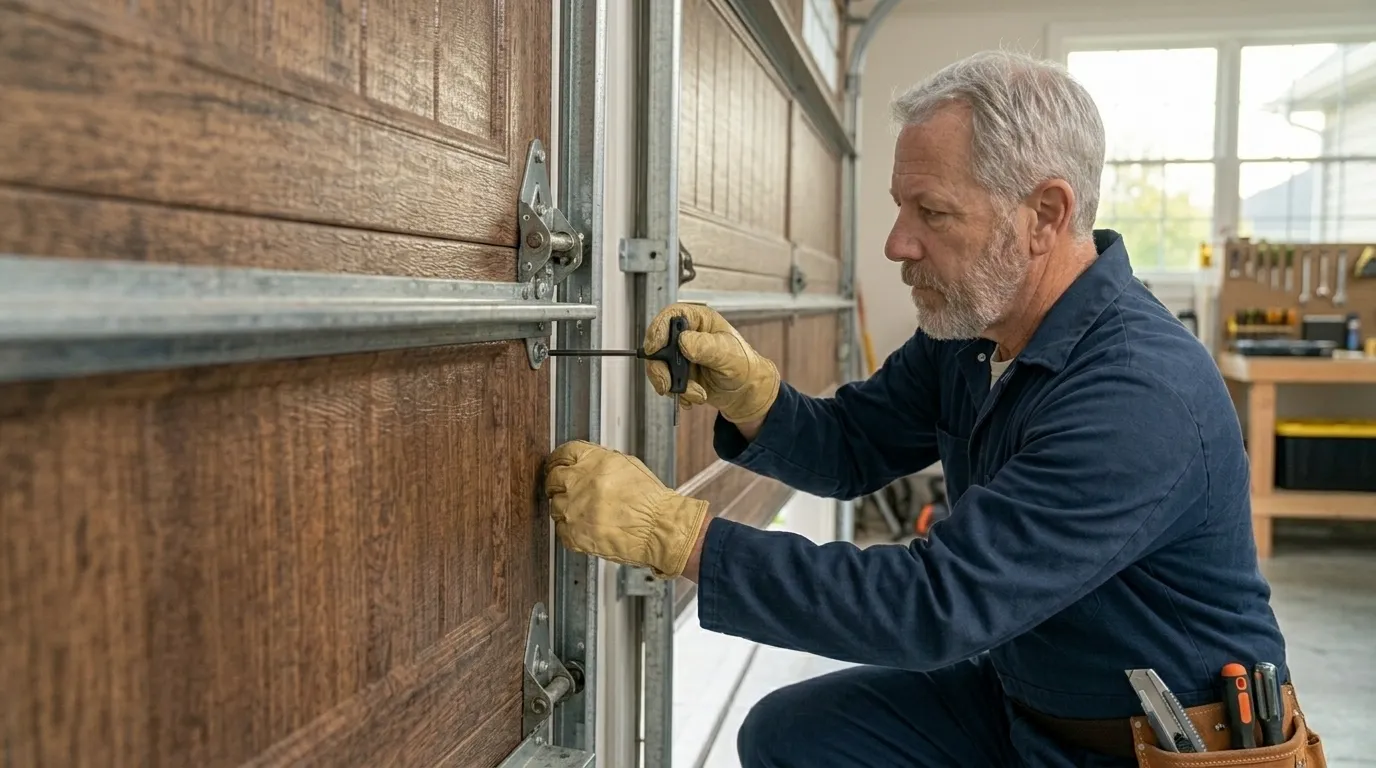
The mistake most owners make with a house this old is spraying the noise instead of diagnosing it. WD-40 on a squeaking hinge quiets things down for a week and masks the fact that the hinge pin is wearing an oval hole into a bracket that's been flexing since before anyone reading this owned the house. On pre-1960 track systems especially, a quiet door for a few days isn't a fixed door - it's a door with fresh grease sitting on top of the same worn steel.
The other common mistake is assuming a noise that started this winter will go away in spring. In a cold-severe climate band like this one, contraction and expansion cycles work metal fatigue faster than they would somewhere milder, so a noise that shows up in January is usually a symptom that got loud enough to hear, not a new problem. Waiting for warm weather doesn't reset the wear; it just gives the same worn part more cycles to fail on.
Doing Nothing For Now
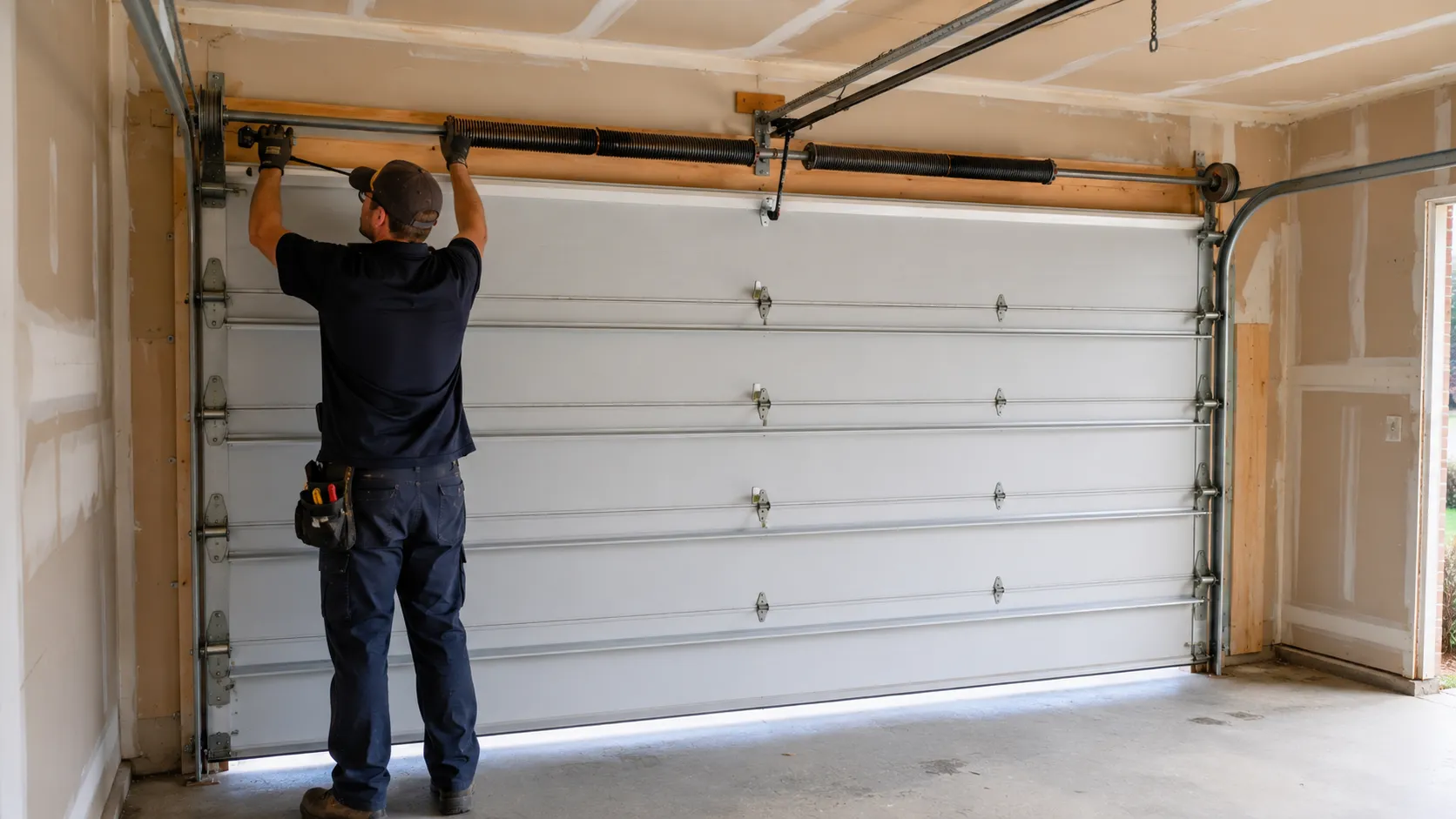
There's a real case for doing nothing about a minor noise for a while - not every squeak needs a same-week call. If the door still opens and closes at a normal speed, closes flush to the floor, and the noise is a single consistent squeak rather than a bang or a grind, you can often get weeks or months out of it with nothing more than watching for change. That's an honest limitation of what any inspection can tell you over the phone: we can't tell you from a description whether a noise is cosmetic or structural.
What changes the math is the season. In a cold-severe climate, a spring or cable that's been marginal all fall tends to let go on the first hard cold snap, because cold steel loses flex right when the door is working hardest to seal against the weather. So doing nothing is fine until the noise changes character - louder, less regular, or paired with the door hesitating partway through its travel.
What Local Conditions Do
Cold-severe winters put two kinds of stress on this housing stock that a mild climate wouldn't. First, torsion springs lose a measurable amount of their working tension as steel gets cold, so a spring that was already marginal from age carries less safety margin exactly when snow load and wind are pushing harder against the door. Second, on houses built before 1960, the header and jamb framing around the door opening has had six or seven decades of freeze-thaw movement, which is why doors on this vintage of house are more likely to bind slightly at one corner - a noise that sounds like the opener straining is often the door hitting a track that's no longer quite square to the frame.
With 5,232 owner-occupied houses in the service area and most of that stock built before 1990, this is the pattern we see across town, not an exception. It's also why a repair on an older Freeport house sometimes needs a bracket or track adjustment that a newer build wouldn't.
How We Can Help
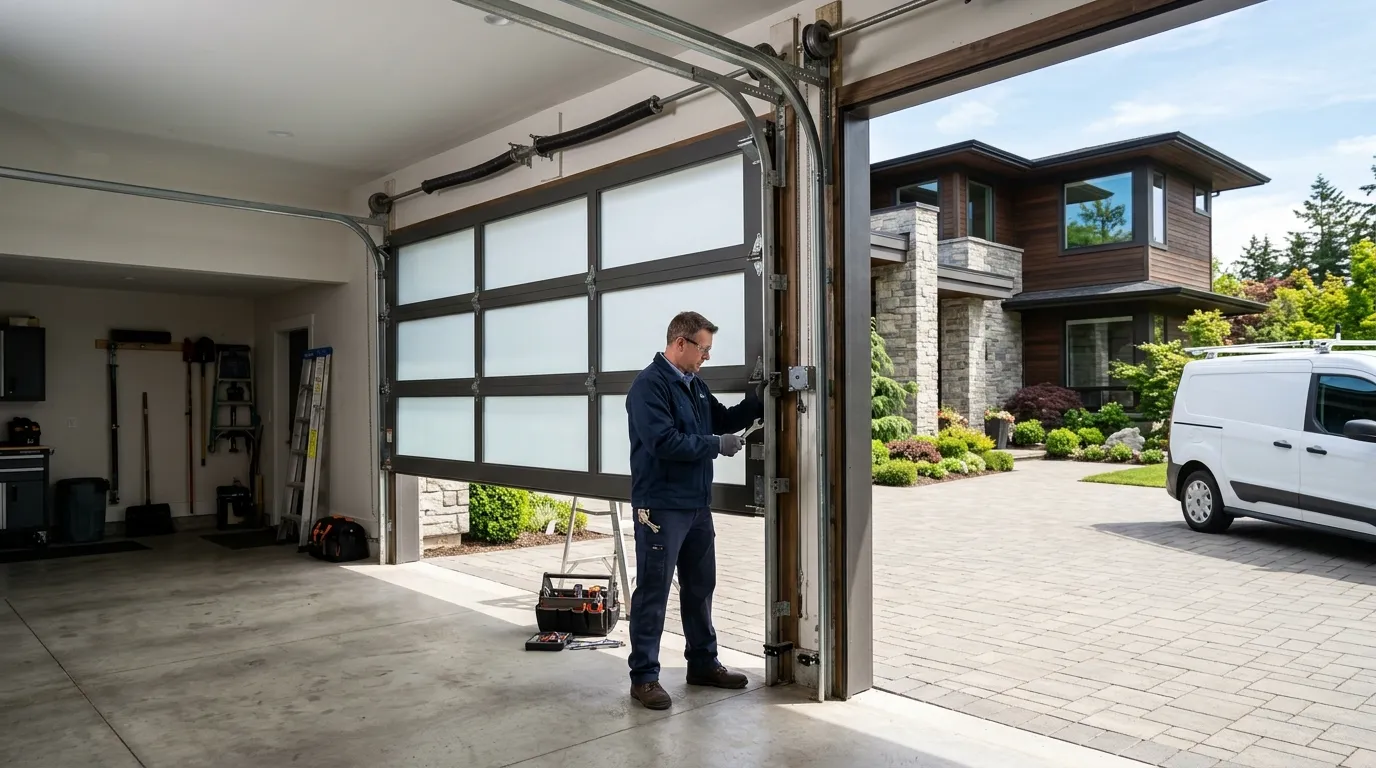
Garage Door Repair
Springs, cables, tracks, rollers, and openers fixed by a tech who explains the problem before touching anything.
Learn more →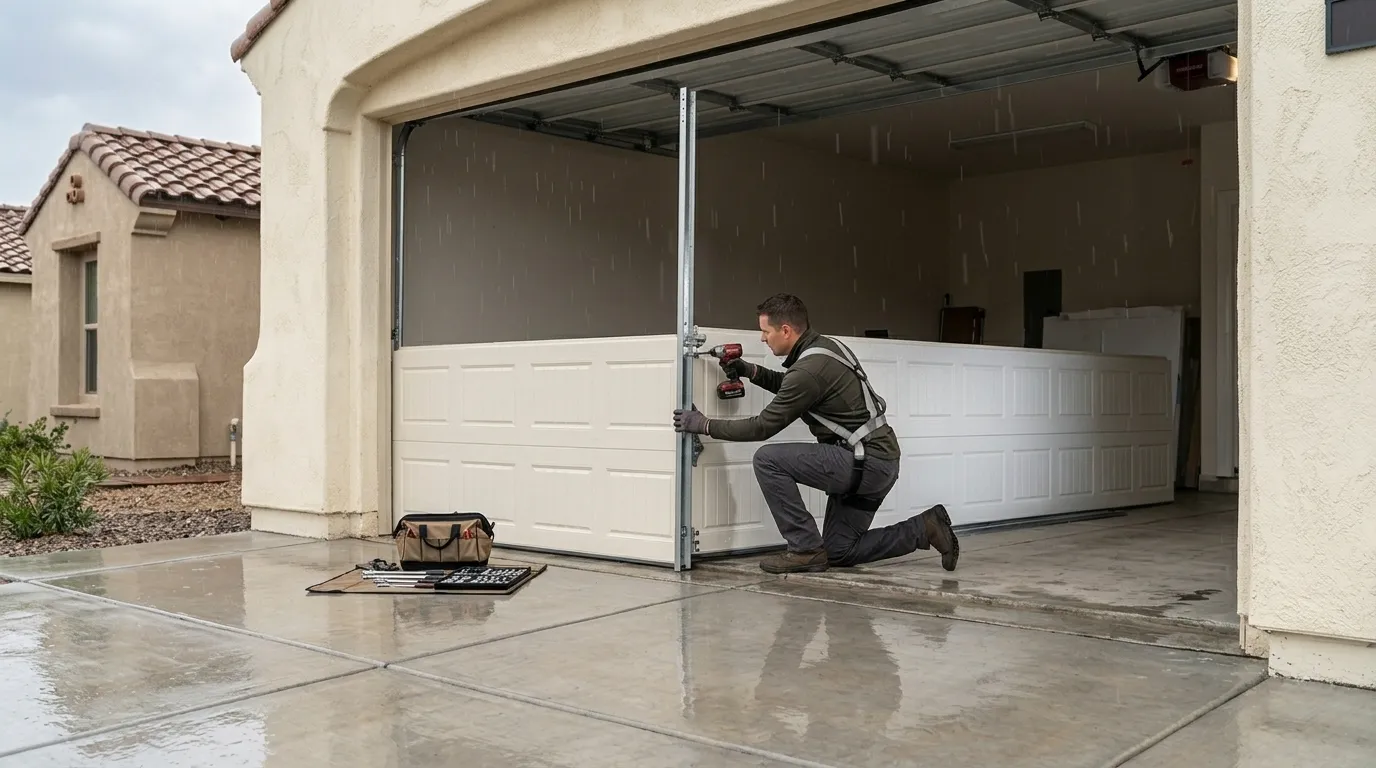
Garage Door Installation
New sectional doors sized and installed for the housing stock actually built in this area.
Learn more →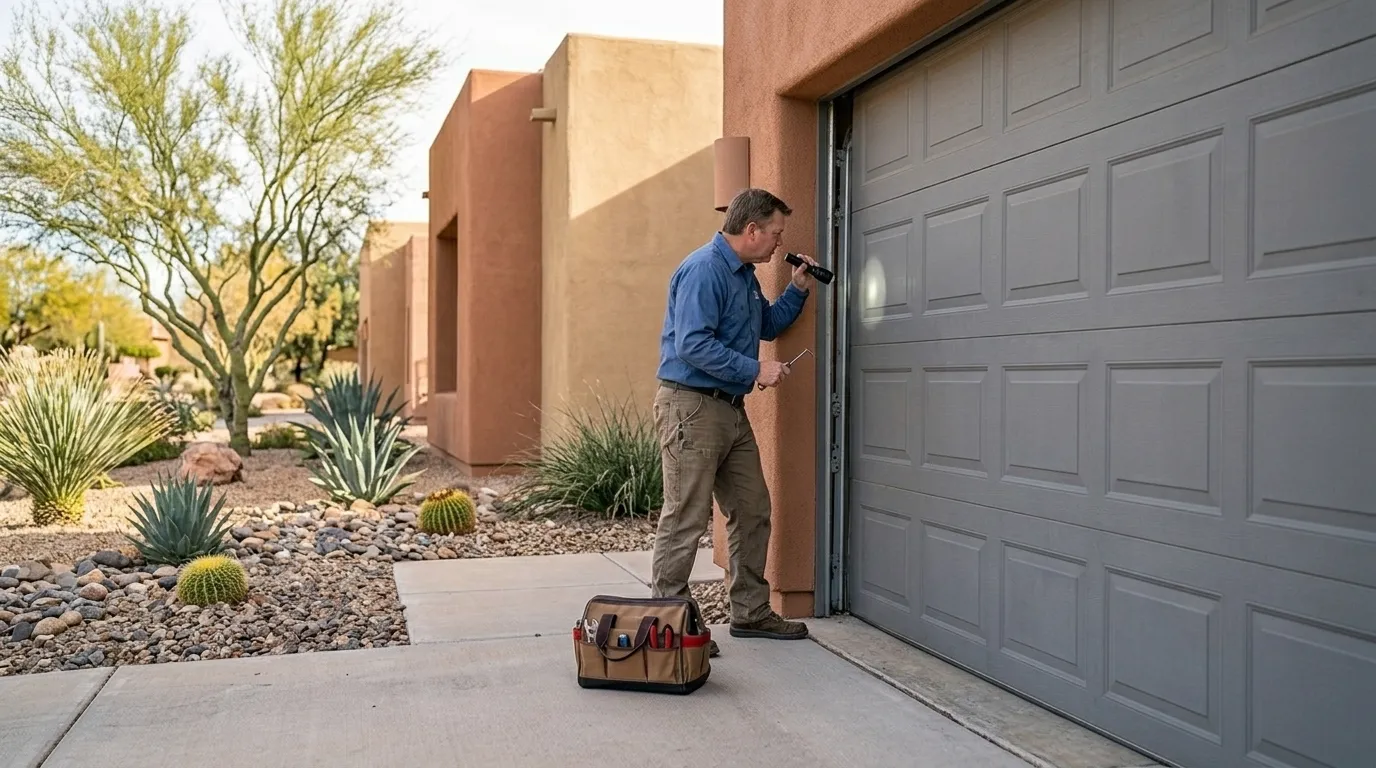
Garage Door Service
Tune-ups, lubrication, and safety checks that catch a small problem before it becomes a service call.
Learn more →Frequently Asked Questions
My garage door makes a loud bang when it closes. Is that an emergency?
Usually yes. A bang on closing is almost always a broken cable or a spring that's let go, and on the pre-1960 hardware common in this area, a broken spring under load can drop the door hard. Don't put the vehicle under it and don't run the opener again until it's looked at.
Why does my door only make noise in the winter?
Cold steel flexes less, so any spring, cable, or bracket that was already marginal from age shows its wear first when temperatures drop. In a cold-severe climate like this one, that's the pattern we see most: a noise that was silent all summer showing up hard in January.
Can I just oil the noise away?
Sometimes, briefly. Lubricant quiets a dry hinge or roller for a while, but on hardware from this housing era it often just masks wear in a bracket or track that's been flexing for decades. If the noise comes back within a couple weeks, it's a part problem, not a lubrication problem.
How old is the hardware likely to be on a house like mine?
Most houses in this part of Freoprt were built between 1938 and 1990, with a median around 1957, and pre-1960 stock is common across the named areas we work in. If your door hasn't been replaced, the track and spring hardware could easily be original.
Have a Door That Needs a Second Opinion?
Call and describe what it is doing - we will tell you what it likely is.